Leonhard Roczek – Cello
Herbert Schuch – Piano
Arvo Pärt: Spiegel im Spiegel (1978)
Mozart Week Salzburg 2014
Practical Peace in daily living.
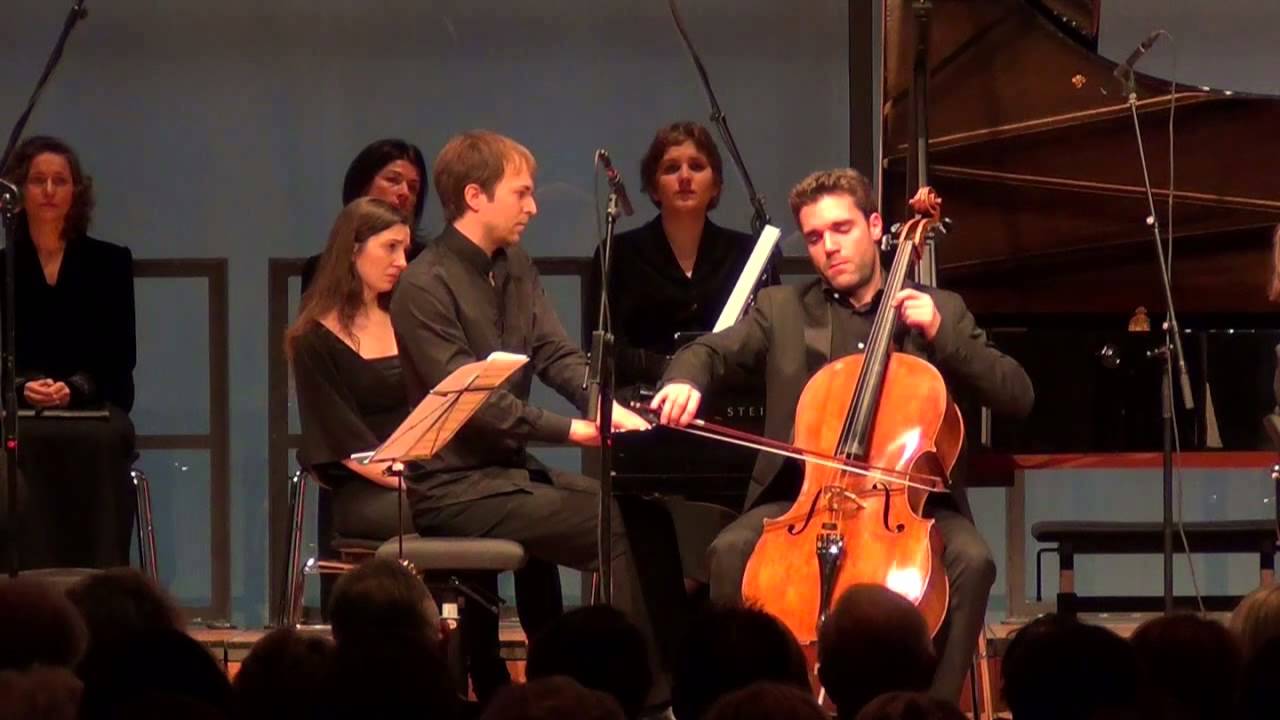
Leonhard Roczek – Cello
Herbert Schuch – Piano
Arvo Pärt: Spiegel im Spiegel (1978)
Mozart Week Salzburg 2014
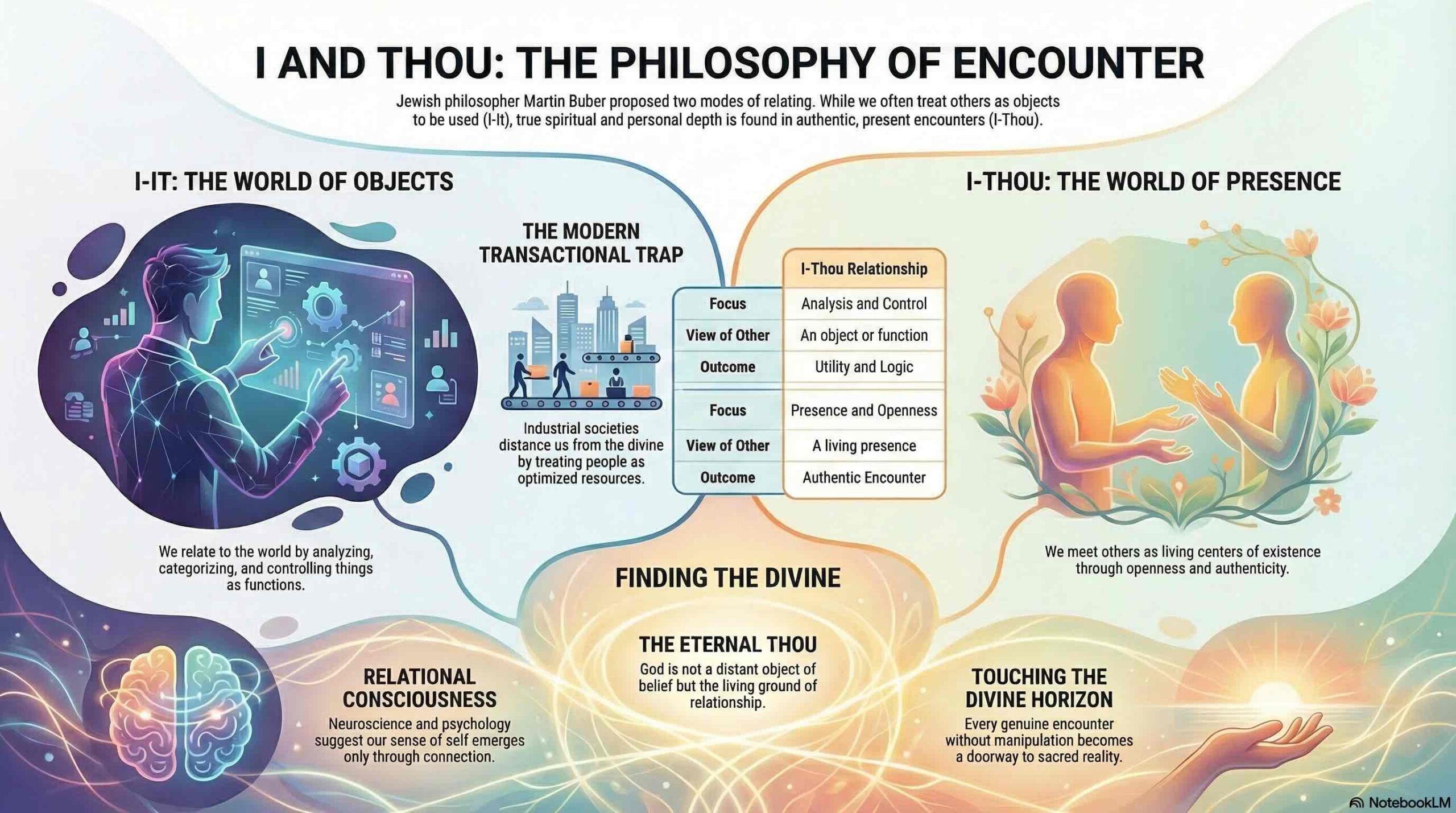
The following has been generated by ai – notebooklm.google.com:
“The provided text explores the 20th-century philosophy of Martin Buber, who redefined the divine as an experience found through human connection rather than abstract doctrine. Buber distinguished between the “I-It” relationship, where we treat the world as a collection of objects to be used, and the “I-Thou” encounter, which involves a living presence between two beings. In this framework, God is not a distant entity to be analyzed but the “Eternal Thou” who becomes visible whenever people engage in authentic, transparent dialogue. Modern life often forces individuals into transactional roles, yet Buber argues that true faith is a participation in these deep, relational moments. Ultimately, the source suggests that the divine horizon is touched not through logic, but through the profound act of being fully present with another.”


“The longer I live,
the more I realize the impact of attitude on life.
Attitude, to me, is more important than facts.
It is more important than the past, than education, than money, than circumstances, than failures, than successes, than what other people think, say or do.
It is more important than appearance, giftedness or skill.
It will make or break a company… a church… a home.
The remarkable thing is we have a choice every day regarding the attitude we embrace for that day.
We cannot change our past…
we cannot change the fact that people will act in a certain way.
We cannot change the inevitable.
The only thing we can do is play the one string we have, and that is our attitude…
I am convinced that life is 10% what happens to me and 90% how I react to it.
And so it is with you… we are in charge of our Attitudes.”
Holger:
I like Charles’ 10/90% formula.
I had my own attempt to become scientific:
“The sense of separation
is 10% faulty thinking
and 90% muscle-memory.”
Yes, attitude is fundamental, but who is in charge?
Is there a personal, separate “me” that can change, or is beneficial change the byproduct of a deeper embrace of Being; seeing that we are not who we think we are.
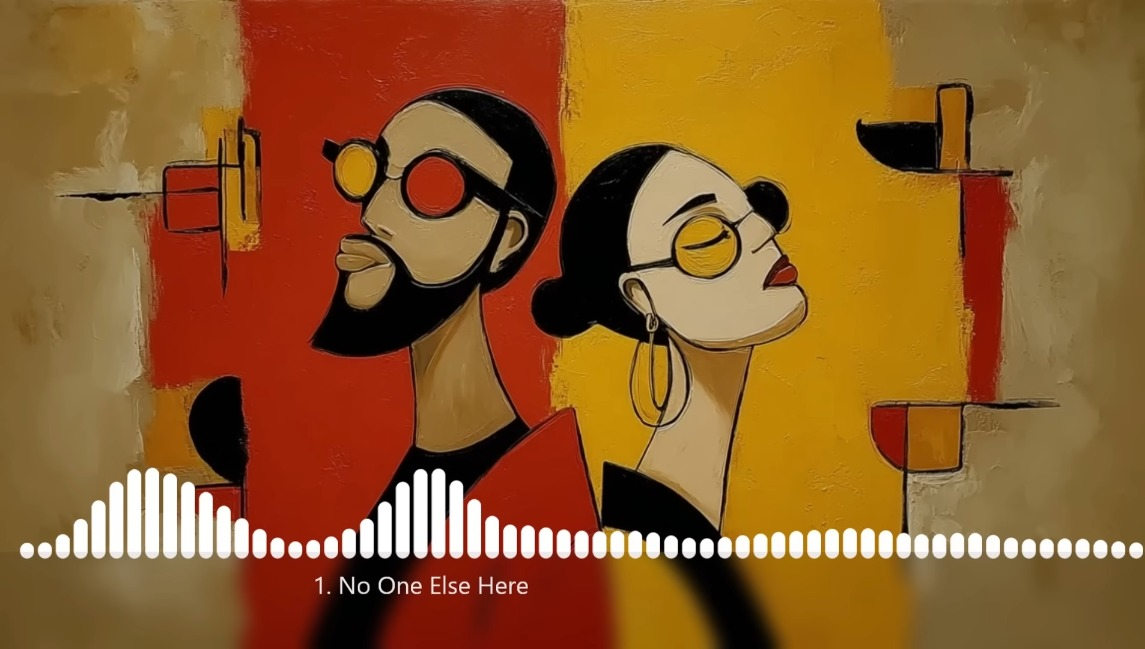
Holger: I enjoy the music and the lyrics ❤️
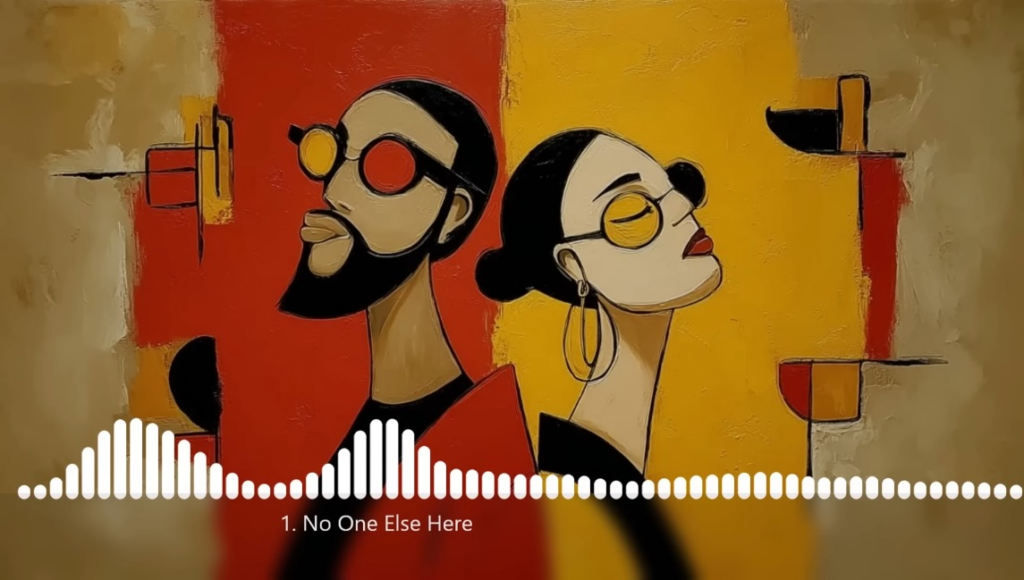
Listen to this song on Youtube
I close the door on the outside
Let the room feel small and bright
No reflection I must fix
Just the way this moment is
I’ve been talking over me
With a voice I didn’t need
So I lower every sound
Let the groove come back around
I feel my weight, I feel my breath
Not a question, not a test
Every thought that wants control
Learns to loosen, let me go
I don’t need a clearer sign
I just need to feel in time
With a kick beneath my feet
And the bass that keeps me steady
When the rhythm strips it bare
I see myself standing there
Nothing extra, nothing new
Just a truth I can’t move through
There’s no one else here
Just me and what’s real
No mask left to remove
I’m alone in this groove
Yeah, there’s no one else here
No reason to steer
Every breath I choose to keep
Feels honest, feels deep
I’ve been counting all the ways
I fell short on better days
Now I count what kept me whole
When I almost lost control
Every scar I tried to hide
Still keeps perfect time inside
Every pause I learned to fear
Feels like space that brought me here
Let the night stay unafraid
Let the groove hold what I made
If I’m quiet, let it stay
I don’t need to rush away
I look back without defense
Every loss will still make some sense
Not because it turned out fine
But it brought me here on time
I don’t promise more or less
I just promise honesty
Every step I let it land
Feels like home inside my hands
There’s no one else here
No crowd, no fear
Just a rhythm I can trust
Holding what I was
Yeah, there’s no one else here
Nothing left unclear
I don’t need to disappear
I’m completely just standing here
Listen to this song on Youtube
I call my reflection in the window tonight
Didn’t look away, didn’t dim the light
All the little doubts tried calling my name
But I smile back, I’m not the same
Every step I took left a mark on the floor
I know what I’m worth now, more than before
I’ve been quiet long enough to hear my voice
Now every move I make is a choice
I don’t need permission, I don’t need a sign
I’ve been waiting on me all this time
I’m standing in my light
I feel it shine
No shadows on my mind tonight
I’m standing in my light
Clear and bright
This is me and it feels right
Used to second guess every word I say
Now I let it roll, let it sway
Every scar tells me I survive
Every beat says I’m alive
I made peace with who I’ve been
I see power in my skin
No more running, no disguise
I trust the fire in my eyes
I walk steady, head up high
Not chasing stars, I am the sky
Every breath feels so true
I finally see it through and through
I’m standing in my light
I feel it shine
No shadows on my mind tonight
I’m standing in my light
Strong and bright
This is me and it feels right
Listen to this song on Youtube
I used to chase the echo of sound
Every voice telling me to turn around
Now I stand still, feel the ground
I know exactly where I’m found
The mirror doesn’t feel like a test
Just a quiet, needed rest
I’ve learned my pace, I’ve learned my time
This road is mine, this step is fine
I don’t raise my voice, I don’t rush the truth
I let it move
I got nothing to prove tonight
I breathe easy in my own life
No second guesses, no rewrite
I got nothing to prove tonight
Every scar taught me how to stand
Every fall helped me understand
I don’t edit who I am
I let it show just as I am
I’ve been hard, I’ve been kind
I’ve been lost inside my mind
Now I trust the space I’m in
Let the quiet pull me in
I walk steady, shoulders wide
No fear walking by my side
What I see feels clear and true
Enough just being me
I got nothing to prove tonight
I breathe easy in my own life
No second guesses, no rewrite
I got nothing to prove tonight
Listen to this song on Youtube
I woke up feeling lighter than before
Like I finally know what I’m here for
The mirror didn’t ask me who to be
Just smiled back honestly
I used to carry weight, the world in mind
Old fears, old words stuck in time
Now I let them fall behind my feet
Every step feels incomplete, no complete
I don’t rush the moment, I don’t fight the flow
I’m exactly where I need to go
I’m clearer than yesterday
Strong today
I trust my heart, I trust my way
I’m clearer than yesterday
No delay
I’m here, I’m real, I’m here to stay
I hear my name when the silence calls
Not afraid of my rises or my falls
Every lesson carved into my sound
Every truth keeps me grounded now
I don’t hide what I feel inside
I let it move me, let it guide
There’s a rhythm in my spine
It says this life is truly mine
I don’t need to prove a thing tonight
I glow steady, not too bright
I walk forward, calm and sure
What I am feels solid, pure
I’m clearer than yesterday
Strong today
I trust my heart, I trust my way
I’m clearer than yesterday
No delay
I’m here, I’m real, I’m here to stay
Listen to this song on Youtube
When the noise finally steps aside
I hear my footsteps inside
Nothing chasing, nothing loud
Just my breath without a crowd
I’ve been holding on to days
That already slipped away
Now I loosen up my hands
Let them fall where they land
I replay words I didn’t say
Then I let them fade to gray
They don’t need a second life
They don’t need to pay the price
After the noise fades
I’m still here
Not afraid to disappear
After the noise fades
I feel clear
Like I’ve been waiting all year
The quiet doesn’t feel like loss
Just a place to pause
I don’t need to fill the space
I just let it hold my face
Every sound I used to chase
Left me moving out of place
Now I settle in the low
Let the stillness overflow
I don’t need to raise my voice
I don’t need to make the choice
I just need to let it land
Feel the rhythm in my hands
After the noise fades
I’m still here
Not afraid to disappear
After the noise fades
I feel clear
Like I’ve been waiting all year
Listen to this song on Youtube
I don’t need to reach too far
I’m exactly where things are
Every step I second guess
Brought me here, I must confess
I’ve been chasing something new
Now I know what’s always true
I don’t need to move to grow
I just need to let it show
Standing where I am
I feel the ground
Nothing lost and nothing found
Standing where I am
I hear the sound
Of my heart beating loud
The mirror doesn’t lie to me
Shows me what I need to see
Not the version I became
But the one who knows my name
I’ve been running from the weight
Now I let it sit and wait
Every fear that knew my face
Learns to take its proper place
I don’t promise clarity
I just promise honesty
Every breath I choose to take
Feels more real for my sake
Standing where I am
I feel the ground
Nothing lost and nothing found
Standing where I am
I hear the sound
Of my heart beating loud
Listen to this song on Youtube
I’ve been holding back too long
Keeping quiet, playing strong
Now I let the walls come down
Let my truth make its sound
Every secret that I kept
Every promise that I slept
Now I lay them in the light
Nothing hidden from my sight
I got nothing left to hide
I let it all come inside
Every part of who I’ve been
I don’t need to hide my skin
I got nothing left to hide
I walk steady, shoulders wide
What you see is what is true
I’m done hiding me from you
Used to edit every word
Make sure nothing could be heard
Now I speak and let it land
Trust the truth inside my hands
Every scar upon my face
Tells a story in its place
I don’t cover, I don’t fade
I just let the marks I made
Show the journey, show the fight
Show the dark and show the light
I don’t need a clean disguise
I just need my honest eyes
I got nothing left to hide
I let it all come inside
Every part of who I’ve been
I don’t need to hide my skin
I got nothing left to hide
I walk steady, shoulders wide
What you see is what is true
I’m done hiding me from you
Listen to this song on Youtube
I’m not chasing what’s ahead
Not replaying what I said
I’m just here inside this beat
Feeling whole and feeling sweet
Every moment that I spent
Wondering where the meaning went
Now I know it’s always been
Right here underneath my skin
I’m good right now
No shadows hanging around
Just a feeling I can trust
I’m exactly where I was
I’m good right now
Heart in sync, no slowing down
I don’t need a different view
I’m comfortable and true
I don’t need to fix a thing
I don’t need to clip my wings
I just need to breathe and stay
Right here in this perfect way
Looking back without regret
Every moment that I met
Was worth a while
Not because it all went smooth
But it taught me how to move
I don’t need a perfect frame
I like me just the same
Every note I let it play
Sounds like me today
I’m good right now
No shadows hanging around
Just a feeling I can trust
I’m exactly where I was
I’m good right now
Heart in sync, no slowing down
I don’t need a different view
I’m comfortable and true
Listen to this song on Youtube
I used to question every step I take
Wonder which parts of me to fake
Now I move easy, no disguise
I mean myself, I recognize
The room feels warmer when I breathe
Like everything just lets me be
No need to rush, no need to win
I finally fit the life I’m in
I don’t chase the noise outside
I listen to the beat inside
I’m comfortable in my skin tonight
No heavy thoughts, no second sight
I stand relaxed, I feel aligned
I’m comfortable in my skin tonight
I’ve been shaped by days gone wrong
Still they taught me how to be strong
Every memory, every line
Led me here right on time
I don’t need a different face
I don’t need to change my place
There’s a calm I can’t deny
Feels like home when I’m inside
I walk steady, no defense
Every move feels like it makes sense
What I see feels true and kind
I’m at peace inside my mind
I’m comfortable in my skin tonight
No heavy thoughts, no second sight
I stand relaxed, I feel aligned
I’m comfortable in my skin tonight
Listen to this song on Youtube
I know this feeling in my chest
Not the worst, not the best
Just the weight I’ve learned to hold
Like a story half untold
I’ve been here before tonight
Same old calm, same old fight
Nothing new to recognize
Just me looking at my eyes
I’ve been wrong, I’ve been right
Both kept me awake at night
Now I let them take their turn
I don’t need to always learn
Every step I second guess
Still brought me where I rest
I don’t call it win or lose
It’s just how I move
When the groove falls in place
I don’t rush, I don’t race
There’s a truth I don’t explain
Just stay
Yeah, I know this feeling
Nothing new, nothing healing
Just a rhythm I can trust
Holding me without a fuss
Yeah, I know this feeling
Not dramatic, not appealing
But it stays, and so do I
I don’t ask it why
I’ve been chasing different names
Calling growth a kind of pain
Now I let the moment speak
In a language calm and deep
Every fear that knew my face
Learns to sit, learns its place
I don’t push it out the room
I just let it move
Let the pocket take its time
Let me stand inside the line
If I shake, I shake in tune
Still inside the groove
I look back without a deal
With no excuse, no appeal
Every version I became
Still responds when I say my name
I don’t promise clarity
I just promise honesty
Every breath I let it stay
Feels like truth in its own way
Yeah, I know this feeling
No disguise, no concealing
Just a pulse I choose to keep
Running steady underneath
Yeah, I know this feeling
Nothing lost, nothing needed
If this moment’s all I choose
I’m aligned with this groove

Reposted from “Empty Shells” on Substack.com
I was raised by a professor and a teacher. I went to an “elite” international school. I studied law and philosophy. I completely identified with what I believed was my ability to think.
Thinking was mandatory: no thinking, no result.
Everything needed an intellectual approach, by default.
But I was incredibly lucky to eventually find out that thinking about things does nothing. It is pointless. And instead of turning me into an incapable idiot as I feared, all it did was uncover peace.
It’s not like there’s nothing left to think about.
It’s that thinking doesn’t do anything and there’s no one in control of it anyway.
Thoughts are about an imaginary future or past, things not under control, or fictional separate agents. The body doesn’t function because of thinking. Interactions are smoother without thinking. Speaking, writing, and other pursuits only flow while ignoring thoughts. Pleasure and joy are ruined by thinking, as we all know …
Even planning, reasoning, calculating … do we have to think about them for them to happen?
Things happen and don’t happen despite voluminous thinking, just look around.
Thoughts are empty shells. And so is the thinker.
Where is this thinker we simply assume exists?
I can’t remember why I cared so much about thinking.
I prefer peace now.
On 28 Jan 2026, at 5:09, Ralph wrote:
On 1 Feb 2026, at 6:06, Ralph wrote:
CHURCH BULLETINS
Thank God for church ladies with typewriters. These sentences, with their typos or slips of tongue, actually appeared in church bulletins or were announced in church services:
The sermon this morning: “Jesus Walks on Water.” The sermon tonight: “Searching for Jesus.”
Ladies, don’t forget the rummage sale. It’s a chance to get rid of those things not worth keeping around the house. Don’t forget to bring your husbands.
The peacemaking meeting scheduled for today has been canceled due to a conflict.
Remember in prayer the many who are sick of our community.
For those of you who have children and don’t know it, we have a nursery downstairs.
Next Thursday there will be tryouts for the choir. They need all the help they can get.
Barbara remains in the hospital and needs blood donors for more transfusions. She is also having trouble sleeping and requests tapes of Pastor Jack’s sermons.
The Rector will preach his farewell message after which the choir will sing: “Break Forth Into Joy.”
A rice-and-bean supper will be held on Tuesday evening in the church hall. Music will follow.
At the evening service tonight, the sermon topic will be “What Is Hell?” Come early and listen to our choir practice.
The church will host an evening of fine dining, super entertainment and gracious hostility.
Potluck supper Sunday at 5:00 PM–prayer and medication to follow.
The ladies of the Church have cast off clothing of every kind. They may be seen in the basement on Friday afternoon.
This evening at 7 PM there will be hymn-singing in the park across from the Church. So bring a blanket and come prepared to sin.
Ladies Bible Study will be held Thursday morning at 10 AM. All ladies are invited to lunch in the Fellowship Hall after the B.S. is done.
Low Self Esteem Support Group will meet Thursday at 7 PM. Please use the back door.
The eighth-graders will be presenting Shakespeare’s Hamlet in the Church basement Friday at 7 PM. The congregation is invited to attend this great tragedy.
The rosebud on the altar this morning is to announce the birth of David Alan Belzer, the sin of Rev. and Mrs. Julius Belzer.
This afternoon there will be a meeting in the south and north ends of the church. Children will be baptized at both ends.
Tuesday at 4 p.m. there will be an ice cream social. All ladies giving milk will please come early.
Wednesday, the Ladies Liturgy Society will meet. Mrs. Jones will sing “Put Me In My Little Bed” accompanied by the pastor.
Thursday at 5:00 p.m. there will be a meeting of the Little Mothers Club. All wishing to become little mothers, please see the minister in his study.
This being Easter Sunday, we will ask Mrs. Lewis to come forward and lay an egg on the altar.
The Associate Minister unveiled the church’s new tithing campaign slogan last Sunday: “I Upped My Pledge–Up Yours”

I have nothing to protect,
I am not afraid to be hurt.
I am not this body-mind called Holger,
yet beyond doubt, I AM!
My happiness and fulfillment
is not dependent on circumstances.
Inner space – peace from the mind – come by grace; are priceless gifts, our birthright.
The me-belief, the hunger to be someone, was the veil hiding in plain sight what I was longing for.
Meeting and loving my Dutch Woman is not added from outside, but a maturity and ripeness beyond words.
It is wonderful to share,
for the benefit of all,
which includes myself.
Love,
Holger
PS: One day… MatingDepartment.com, just for fun.

Thank you Ralph!
Memory comes up in the form of thoughts and images in the present moment like any other thought activity. So memory is a form of thought. Memories are present thoughts that arise and pass in present-moment awareness. Practically speaking, memory seems to be a function that ties together, coordinates and recalls former thoughts. It appears to store concepts and images and bring them forth. Conditioned beliefs, such as the notion of being a separate self and all the related identifications, survive in memory. Without memory, they have no substance, no continuity, no real existence. So, in a sense, you can say that all our problems are due to the capacity of memory. All of our beliefs, points of view and assumptions appear to be stored there. Furthermore, the reference point of a fixed ‘I’, thinker or self only resides in memory.
Memory as a thing in itself is hard to pin down. It is like the concept of ‘the mind’. Where is ‘the mind’? There are thoughts passing through awareness, but where is ‘the mind’ apart from that? It is the same with memory. We posit such a function or entity, but where is it apart from the presently arising thoughts? It just so happens that we label some presently occurring thoughts as memories. Then we assume a past to which those memories refer. In this way, a whole conceptual world is spun up in thoughts. But they are all occurring here and now in present awareness. It is castles in air being constructed in thought. In a moment, we are conceiving of a past time, a past world, a past entity that was in that world, a memory to hold all that and ourselves as some of kind being present in the middle of all of it. But take a deeper look and see what is going on. In present awareness, present thoughts are appearing and disappearing. It is all purely conceptual, purely imagined. Time, the external world and the separate entity are all posited in thought. They are taken as real, but are not actually present as substantial things in themselves.
This is easy to see in the case of a dream. You fall into a dream state. In that dream state, you have a discussion with a friend about something you did together five years ago (in the dream). A normal conversation occurs and you and your dream friend discuss various events that happened. Appropriate memories appear to corroborate everything. When you wake up you look back and see that it was all fabricated in the mind in the moment of dreaming. There was no past at all. Not to mention that there were no real dream characters either! It was all appearances taken as real. However, awareness stands beyond, free and untouched. It is not even in the dream. The dream is in it. It suffers no limitations occurring in the dream. The awareness itself is no limited appearance in the dream. It is not any particular entity or object in the dream. It is the same with our present awareness in this apparent waking state.
Conventionally, you can say that the mind creates the notion of a substantial, independent self and that this belief is sustained in memory. There is no harm in that as far as it goes. But the truth is that it is all simply present thoughts. And there is no separate thinker or ‘me’ to be found.
Your actual identity is that space-like, utterly free awareness itself. All self-centered thoughts are baseless, as there is no one to whom they apply. See this clearly and there is really nothing else needed. It is the heart of the matter. Seeing this, suffering, doubt, seeking and personal problems vanish entirely.
Holger:
“Before Abraham was I am.”
“I am with you always.”
“I have told you these things, so that in me you may have peace. In this world you will have trouble. But take heart! I have overcome the world.”
“The world” is thoughts, feelings, perceptions.
“Who do you say I am?”
What are you?
The answer is not in the mind, is not in the realm of thinking (this world). ❤️

From Katrijn Van Oudheusden.
The event
I’m at the hairdresser, looking at this face with all its sagging bits that I swear weren’t there the last time I was here. I notice that no matter how I tilt my head or stretch my features, those bits stubbornly remain right there, literally in my face. The hairdresser notices, smiles knowingly, and tells me to hold still while she works on the part of my appearance she can alter.
The interpretation
The body is quite obviously aging. It seems to have accelerated lately, approaching 50. There are so many beliefs around aging. Here are two you might recognize — and it can be interesting to add your own:
Of course, these beliefs cause unease or even suffering. But here’s the frustrating bit: we believe we’re not supposed to have these beliefs!
Because we’re spiritually advanced enough to know we’re not the body, right? And we know that aging is part of life, not something to try to avoid or manage. And if we were truly awake we’d no longer care about bodily things and just rest in the peace of pure awareness all the time …
The inquiry — please pause at every point to check if it’s true
Stay in the seeing and be free.
Kat.
If you have feedback or if there’s a situation you want me to write an inquiry about, just reply to this email.