JannekeHolger.com

Home page 🪓

Practical Peace in daily living.

Author: Admin

  • Memory

    Memory

    Thank you Ralph!

    Memory comes up in the form of thoughts and images in the present moment like any other thought activity. So memory is a form of thought. Memories are present thoughts that arise and pass in present-moment awareness. Practically speaking, memory seems to be a function that ties together, coordinates and recalls former thoughts. It appears to store concepts and images and bring them forth. Conditioned beliefs, such as the notion of being a separate self and all the related identifications, survive in memory. Without memory, they have no substance, no continuity, no real existence. So, in a sense, you can say that all our problems are due to the capacity of memory. All of our beliefs, points of view and assumptions appear to be stored there. Furthermore, the reference point of a fixed ā€˜I’, thinker or self only resides in memory.

    Memory as a thing in itself is hard to pin down. It is like the concept of ā€˜the mind’. Where is ā€˜the mind’? There are thoughts passing through awareness, but where is ā€˜the mind’ apart from that? It is the same with memory. We posit such a function or entity, but where is it apart from the presently arising thoughts? It just so happens that we label some presently occurring thoughts as memories. Then we assume a past to which those memories refer. In this way, a whole conceptual world is spun up in thoughts. But they are all occurring here and now in present awareness. It is castles in air being constructed in thought. In a moment, we are conceiving of a past time, a past world, a past entity that was in that world, a memory to hold all that and ourselves as some of kind being present in the middle of all of it. But take a deeper look and see what is going on. In present awareness, present thoughts are appearing and disappearing. It is all purely conceptual, purely imagined. Time, the external world and the separate entity are all posited in thought. They are taken as real, but are not actually present as substantial things in themselves.

    This is easy to see in the case of a dream. You fall into a dream state. In that dream state, you have a discussion with a friend about something you did together five years ago (in the dream). A normal conversation occurs and you and your dream friend discuss various events that happened. Appropriate memories appear to corroborate everything. When you wake up you look back and see that it was all fabricated in the mind in the moment of dreaming. There was no past at all. Not to mention that there were no real dream characters either! It was all appearances taken as real. However, awareness stands beyond, free and untouched. It is not even in the dream. The dream is in it. It suffers no limitations occurring in the dream. The awareness itself is no limited appearance in the dream. It is not any particular entity or object in the dream. It is the same with our present awareness in this apparent waking state.

    Conventionally, you can say that the mind creates the notion of a substantial, independent self and that this belief is sustained in memory. There is no harm in that as far as it goes. But the truth is that it is all simply present thoughts. And there is no separate thinker or ā€˜me’ to be found.

    Your actual identity is that space-like, utterly free awareness itself. All self-centered thoughts are baseless, as there is no one to whom they apply. See this clearly and there is really nothing else needed. It is the heart of the matter. Seeing this, suffering, doubt, seeking and personal problems vanish entirely.

    John Wheeler

    Holger:

    “Before Abraham was I am.”

    “I am with you always.”

    ā€œI have told you these things, so that in me you may have peace. In this world you will have trouble. But take heart! I have overcome the world.ā€

    “The world” is thoughts, feelings, perceptions.
    “Who do you say I am?”

    What are you?
    The answer is not in the mind, is not in the realm of thinking (thisĀ world). ā¤ļø

  • Kat:  This aging face

    Kat: This aging face

    From Katrijn Van Oudheusden.

    The event

    I’m at the hairdresser, looking at this face with all its sagging bits that I swear weren’t there the last time I was here. I notice that no matter how I tilt my head or stretch my features, those bits stubbornly remain right there, literally in my face. The hairdresser notices, smiles knowingly, and tells me to hold still while she works on the part of my appearance she can alter.

    The interpretation

    The body is quite obviously aging. It seems to have accelerated lately, approaching 50. There are so many beliefs around aging. Here are two you might recognize — and it can be interesting to add your own:

    • Staying healthy while aging is due to how well you took care of yourself. Health aging is your achievement, unhealthy aging is your own damn fault.
    • The worst aspect of aging is when you become dependent on others. This must be delayed or ideally avoided at all costs.

    Of course, these beliefs cause unease or even suffering. But here’s the frustrating bit: we believe we’re not supposed to have these beliefs!

    Because we’re spiritually advanced enough to know we’re not the body, right? And we know that aging is part of life, not something to try to avoid or manage. And if we were truly awake we’d no longer care about bodily things and just rest in the peace of pure awareness all the time …

    The inquiry — please pause at every point to check if it’s true

    • Is it a problem that these beliefs appear, or is the problem that we think they shouldn’t?
    • Do you control what you believe? Belief simply means a thought is currently accepted as true. Please look carefully. Don’t continue until the answer is clear from your own experience.
    • So if we say, don’t believe your thoughts, or question your beliefs — who is going to make that happen? It could happen. It does happen. But is anyone in control of it happening?
    • Believing something, for 5 seconds or 50 years, is spontaneous. You have no say in the matter.
    • No one has control over what they believe. Imagine if we all knew and lived this!
    • Then can our beliefs in any way define us?
    • What knows all beliefs as they come and go? Stop and recognize that.
    • Is that ever changed or affected by beliefs?
    • Could this unaffected, ever-present knowing be what we are?

    Stay in the seeing and be free.

    Kat.

    If you have feedback or if there’s a situation you want me to write an inquiry about, just reply to this email.

    The writer

  • Beethoven Piano Sonata No.Ā 29

    Beethoven Piano Sonata No.Ā 29

    Beethoven Piano Sonata No. 29 in B-Flat Major, Op. 106 Hammerklavier 3. Adagio sostenuto

    Alfred Brendel

    Brendel was born on 5 January 1931 and died on 17 June 2025.

    Alfred Brendel was a Czech‑born Austrian pianist, writer, and lecturer, widely regarded as one of the great interpreters of the Austro‑German canon, especially Beethoven, Schubert, Mozart, and Liszt. His playing is often described as architectural, lucid, and intellectually rigorous, with a strong emphasis on fidelity to the score rather than overt personal display.

    Perplexity.ai

    Thank you Rupert Spira for recommending Beethoven’s 29th!

    šŸ•Šļø šŸ’¤ 🪓

    Thank you Rick for recommending #5!
    Different dynamics than #29 šŸŽ‰.

    I am very happy that Elsbeth found such a. loving friend ā¤ļø in you!

    Image Source

  • From Ralph: JudyĀ Collins – TheĀ Rose

    From Ralph: JudyĀ Collins – TheĀ Rose

    What is the song “Judy Collins – The Rose” about?

    “I’d be happy to discuss “The Rose,” though I should note that while Judy Collins did record a beautiful version of this song, it was originally written and performed by Amanda McBroom and famously recorded by Bette Midler for the 1979 film The Rose.

    The song is a poignant meditation on love and its challenges. It uses the metaphor of a rose throughout, exploring how love can be perceived in different ways – as something that causes pain, demands too much, or seems impossible to find.

    The core message is one of hope and resilience. It suggests that what might seem like an end (like a seed buried in winter) can actually be the beginning of something beautiful. The song encourages listeners not to be afraid to love, even when it feels risky or painful, because love has the power to bloom and transform, much like a rose emerging in spring.

    The imagery moves from harsh descriptions of love as something that wounds or drowns, to the gentler realization that beneath the difficulties, there’s potential for growth and beauty. It’s ultimately an uplifting song about vulnerability, perseverance, and the transformative nature of love.”

    Source: Perplexity.ai

    What is this type of music called?

    “The Rose” is typically classified as a pop ballad or adult contemporary ballad.

    The song has a slow, emotional tempo with a focus on heartfelt lyrics and melody, which are hallmarks of the ballad form. It features:

    • A piano-driven arrangement
    • Emotional, introspective lyrics
    • A gradual build in intensity
    • A focus on vocal performance and expression

    Depending on the version, it can also have elements of:

    • Soft rock (particularly in Bette Midler’s original recording)
    • Folk (in versions like Judy Collins’, which emphasizes acoustic instrumentation and a more intimate vocal style)
    • Easy listening or MOR (Middle of the Road) – terms used for accessible, melodic popular music

    This style was especially popular in the late 1970s and 1980s, characterized by emotional depth, strong melodies, and production that highlighted the vocalist. Songs like “The Rose” became standards partly because they transcended genre boundaries and appealed to a broad audience through their universal themes and memorable melodies.

    Source: Perplexity.ai

  • Read Me First…

    Read Me First…

    This website is under construction šŸ•Šļø

    Holger and his websites can get easily confusing (-;

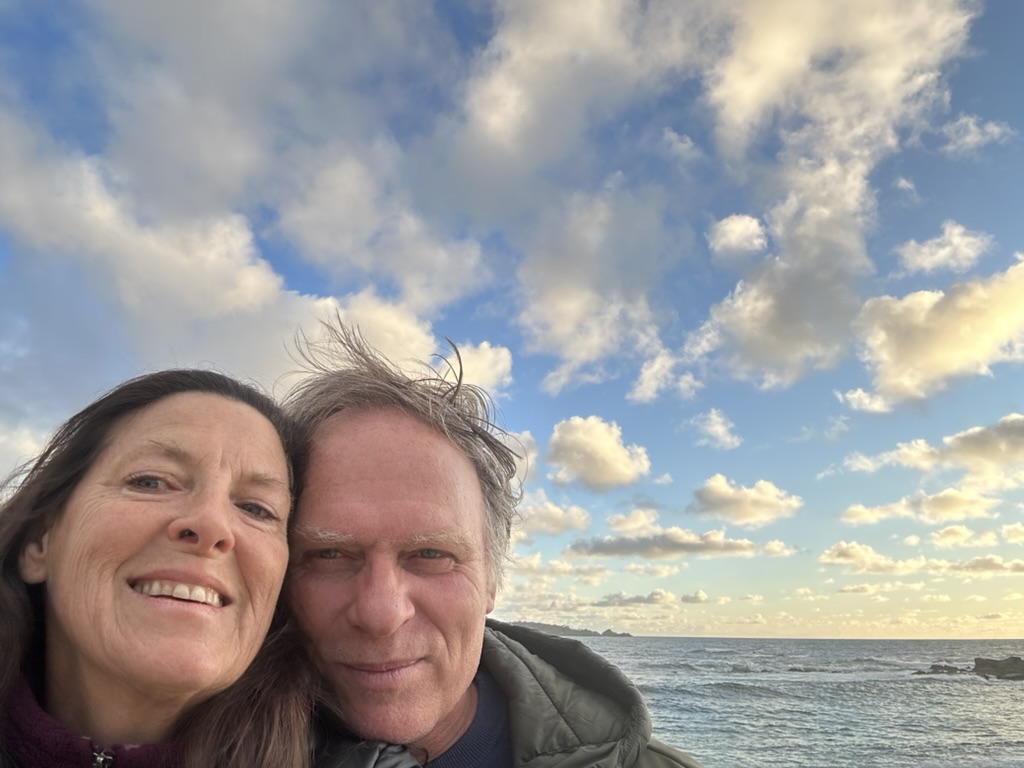
    JannekeHolger.com is intended to celebrate our being together.

    Heart-Posture.com could be a commitment device, to find clear words for the wordless, to disentangle the mind, to relax the me-contraction that is the root of our human suffering and sense of lack.

    JannekeCello.com is intended as a hub for Janneke – the Cello Player, for her Kammer Music and teaching students on the Monterey Peninsula.